
Table of Contents
- Signs of Dirty Air Ducts You Should Not Ignore
- Average Cost of Air Duct Cleaning: What Drives the Price
- How Often to Clean Air Ducts in a Texas Home
- The Air Duct Cleaning Process: What a Real Service Looks Like
- DIY vs. Professional Air Duct Cleaning: Risks That Cost More
- Dryer Vent Cleaning and HVAC Efficiency: The Overlooked Pair
- Energy Savings and Indoor Air Quality: What Cleaning Actually Changes
- Choosing a Reputable Air Duct Cleaning Company in Texas
- Frequently Asked Questions
Last Updated: September 26, 2026
Signs of Dirty Air Ducts You Should Not Ignore
Air duct cleaning in Texas homes is maintenance for the system that moves every breath of air through your house, not a cosmetic service.
At Red Air Duct Cleaning, we see the same pattern in Dallas homes: the filter gets changed, but the ductwork behind it collects dust for years, then circulates it back into living spaces every time the system runs.
Watch for these signs:
- Visible dust puffing from supply vents when the system starts
- A musty or stale smell that lingers after cleaning the room
- Allergy symptoms that worsen indoors, especially in the morning
- Uneven airflow between rooms
- Higher energy bills with no change in usage habits
- Dark streaks around vent covers or ceiling registers
Visual Inspection Guide: What to Check Before You Call
A flashlight and a screwdriver are enough for a basic check. Remove a supply vent cover and angle the light along the duct wall.
Average Cost of Air Duct Cleaning: What Drives the Price
Most homeowners want one thing first: a number. The cost of whole-home air duct cleaning for a single-family house depends on the variables below. Small condos and single-system homes typically fall at the lower end; large two-story homes with dual systems, long trunk runs, and multiple returns push toward the upper end. Treat any quote that seems unusually low as a signal to ask what is and is not included.
The price tracks measurable factors:
- Number of systems and vents. One HVAC unit with 10 registers is a different job than two units with 25 registers and separate return trunks. More access points means more time, more hose, and more labor.
- Home size and duct layout. Square footage matters less than duct length and complexity. A sprawling ranch with long horizontal runs takes longer than a compact two-story with short vertical drops.
- Duct material. Rigid sheet metal is the most forgiving to clean. Flexible duct requires gentler methods, and older or damaged flex can limit how aggressively a technician can work.
- Access. Ducts buried behind finished ceilings, in crawl spaces, or in tight attic runs add setup and maneuvering time. Easy attic or basement access keeps the price down.
- Level of buildup. A lightly dusted system cleans faster than one with years of accumulation, pest debris, or microbial growth that needs remediation.
- Add-on services. Dryer vent cleaning, sanitization or fogging, coil cleaning, and blower cleaning are frequently quoted separately. Bundling them into one visit is usually cheaper than booking them individually.
How to Read a Quote Without Getting Burned
Ask for the scope in writing before comparing numbers. A useful quote names the components covered: supply registers, return grilles, trunk lines, the plenum, the blower compartment, and the evaporator coil. If any are excluded, the price is not comparable to a full-system quote.
Some low-cost providers use a rotating brush on flexible ductwork, which can tear the inner liner. The damage is invisible until airflow drops or the duct collapses. Ask any provider how they clean flex duct before you book.
Where the Money Actually Goes
Labor is the largest line item, since a thorough cleaning is hands-on work at every register and along every run. Equipment is second: commercial negative-air machines and HEPA-filtered vacuums sized to the system cost far more than a shop vacuum and pull debris out instead of stirring it up. Documentation, insurance, and certified technicians round out the overhead that separates a professional quote from a door-knock special.
How Often to Clean Air Ducts in a Texas Home
There is no single interval that fits every house. There is no single interval that fits every house. Your schedule depends on how hard your system works, what it pulls in, and how much moisture the ductwork sees. Your schedule depends on how hard your system works, what it pulls in, and how much moisture the ductwork sees.
A Seasonal Maintenance Schedule That Fits the Climate
Think in seasons rather than years alone:
- Spring (before cooling season ramps up). This is the ideal window for a full duct cleaning. You clear out the winter’s accumulation before the system starts running daily, so you are not circulating last season’s debris all summer. It is also the right time to check the evaporator coil and change the filter.
- Early summer. Confirm the condensate drain line is clear and the drain pan is dry. Standing water near the air handler is the most common path for moisture to reach ductwork.
- Late summer. In humid regions, do a quick visual check of accessible ducts and the air handler for musty odors or dark patches. Catching microbial growth early keeps it from spreading through the system.
- Fall (before heating season). A second good window for cleaning, especially if you skipped spring. Heating dries the air and can stir up settled dust, so starting clean reduces how much gets redistributed.
- Winter. Lower run times mean less debris movement, which makes it a reasonable time for dryer vent checks and filter changes rather than a full duct cleaning.
Matching Frequency to Your Household
Use the table below as a starting point, then adjust for how your home actually behaves.
| Situation | Recommended Frequency | Why |
|---|---|---|
| No pets, no allergies, newer build | Every 4-5 years | Lower debris load |
| One or more pets | Every 2-3 years | Dander and hair accumulate fast |
| Allergy or asthma in the household | Every 2-3 years | Reduces airborne irritants |
| Recent renovation or water damage | Immediately, then reassess | Construction dust and moisture |
| Humid coastal climate | Lean toward the shorter end | Moisture raises mold risk |
| Dry inland climate | Standard interval is usually fine | Less moisture-driven growth |
| Commercial space with heavy foot traffic | Annually | Higher particulate load |
The Signs That Override the Calendar
Frequency is a guideline, but your system will tell you when it needs attention sooner. Book an inspection for visible dust puffing from supply vents at startup, a musty smell that lingers after cleaning a room, allergy symptoms that worsen indoors, uneven airflow between rooms, or rising energy bills with no change in habits. Two or more together usually point to a real problem.
The Air Duct Cleaning Process: What a Real Service Looks Like
A proper cleaning follows a defined sequence, not a quick pass with a shop vacuum. The technician should walk you through each stage before starting.
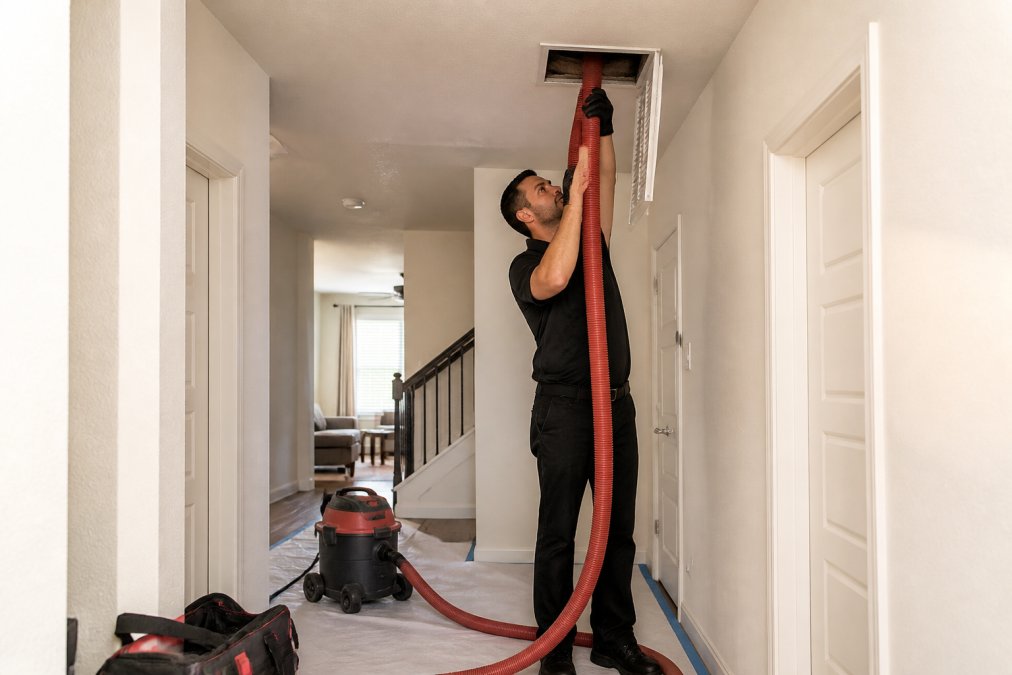
The standard process includes:
- Inspection of the full system, including vents, returns, and the air handler
- Protection of floors and furnishings before equipment comes in
- Negative air pressure setup, using a powerful vacuum to pull debris out of the system rather than pushing it into the room
- Contact cleaning of each register and trunk line with brushes and air whips
- Coil and blower cleaning, since these collect debris the ducts carry
- Before and after photos so you can see what changed
DIY vs. Professional Air Duct Cleaning: Risks That Cost More
DIY duct cleaning is limited to what you can reach through a vent opening: the first few feet of duct and nothing beyond.
Before booking any provider, ask two questions: how do you handle flexible ductwork, and will I get photos of the before and after? A provider who cannot answer both clearly is not set up for thorough work.
Dryer Vent Cleaning and HVAC Efficiency: The Overlooked Pair
Dryer vent cleaning is a fire safety service first and an efficiency service second. Lint accumulates in the vent line with every load and is highly flammable.
Energy Savings and Indoor Air Quality: What Cleaning Actually Changes
Clean ducts support better indoor air quality and steadier HVAC performance: the system moves air with less resistance and reaches the target temperature with less run time.
What cleaning actually changes:
- Airflow: registers deliver closer to their designed output
- Airborne particles: less dust recirculates through living spaces
- System strain: the blower works against less resistance
- Odors: trapped debris and moisture stop feeding musty smells
Choosing a Reputable Air Duct Cleaning Company in Texas
Ask about certification, equipment, and documentation before comparing quotes. A reputable provider answers without hesitation.
Check these items:
- Commercial vacuum and negative air pressure equipment, not shop vacuums
- Before and after photo documentation as standard practice
- Transparent pricing published or quoted upfront
- Willingness to explain the process in plain language
Frequently Asked Questions
How much does duct cleaning cost in Texas?
The average cost of air duct cleaning depends on home size, number of vents, system accessibility, and whether dryer vent cleaning is included. Single-story homes with fewer vents typically fall at the lower end, while larger properties with multiple HVAC systems cost more. Red Air Duct Cleaning offers transparent pricing, and you can get a quote from their website to understand the cost before booking.
How often should you have your air ducts cleaned?
Most homes benefit from professional cleaning every two to three years. Clean more often if you have pets, allergy sufferers, recent remodeling, water damage, or visible mold near vents. In Texas, where HVAC systems run heavily from spring through fall, dust and allergen accumulation happens faster than in milder climates. A technician can inspect your ducts and recommend a schedule based on what they actually find, not a one-size-fits-all plan.
What are the downsides to air duct cleaning?
Poorly done cleaning can stir up dust and release it into your living space, damage fragile duct lining, or leave debris behind in the system. Some providers also use high-pressure brushes on ductwork that cannot handle them. The bigger risk is paying for a service with no proof of work. Ask for before-and-after photos and a clear explanation of the process before anyone starts.
What should I look for in a reputable duct cleaning company?
Look for transparent pricing, before-and-after photo documentation, and clear answers about what the service includes. A reputable company will explain the process, show you what they found, and not pressure you into maintenance plans you do not need. Red Air Duct Cleaning provides photo documentation with every job so you can see exactly what changed.